Shifts in French Gambling Oversight Transform Live Dealer Access on Mobile Platforms
Blake Müller · Aug 18, 2026

Shifts in French Gambling Oversight Transform Live Dealer Access on Mobile Platforms
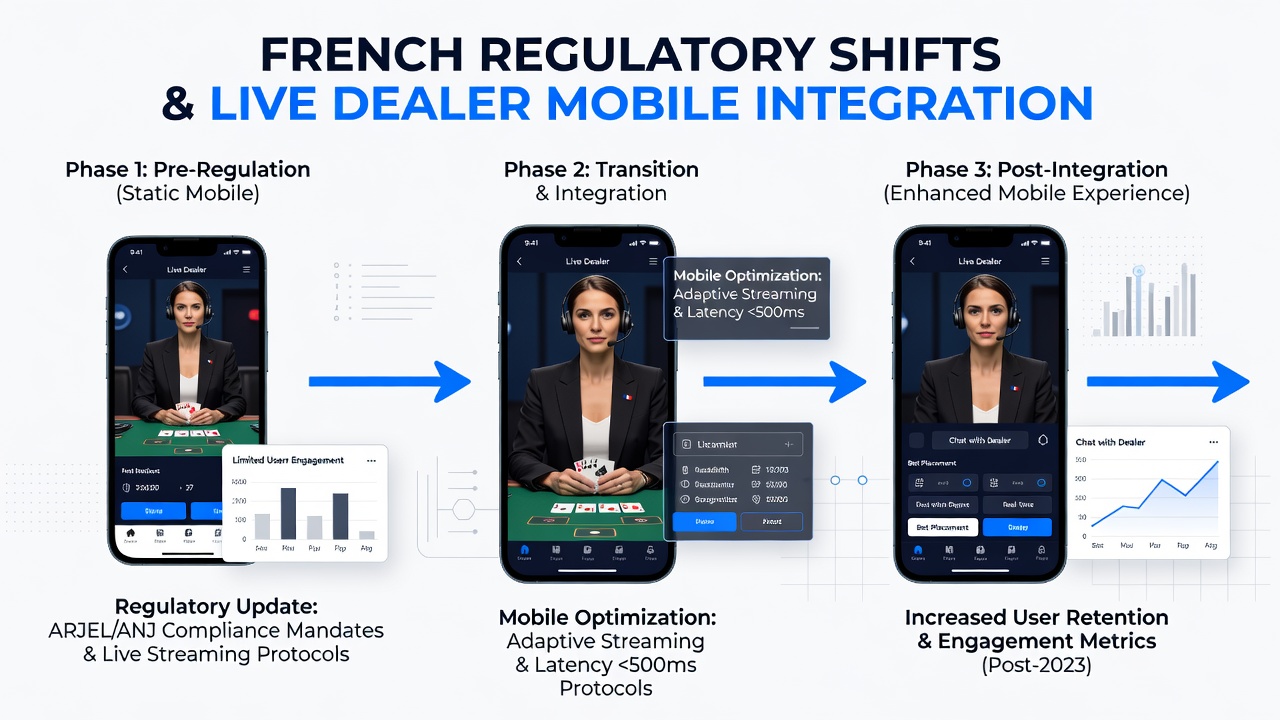
France has updated its approach to online gambling oversight through the Autorité Nationale des Jeux, which continues to refine licensing requirements and technical standards for operators, and these adjustments directly influence how live dealer games reach players on mobile devices. Data from regulatory filings shows that mobile traffic now accounts for over 70 percent of live dealer sessions in licensed markets, prompting authorities to examine streaming quality, latency controls, and identity verification processes in greater detail.
Recent Adjustments to Licensing and Compliance
The regulatory body introduced new guidelines in 2024 that emphasize real-time monitoring of game integrity and player protection measures, while operators must demonstrate that their mobile applications meet stricter encryption and geolocation standards before receiving or renewing licenses. Experts at the French Ministry of Economy have noted that these rules build on earlier frameworks established after the 2010 liberalization, yet they incorporate fresh requirements for live video feeds that connect studios directly to smartphones and tablets.
Operators report that integration timelines have lengthened because each new mobile feature undergoes review for compliance with responsible gaming tools such as session limits and deposit caps. Figures released by industry associations indicate that approval cycles for updated live dealer platforms now average four to six months, compared with shorter periods before the latest round of updates.
Effects on Live Dealer Technology in Mobile Environments
Live dealer integration requires seamless transmission of video from physical tables to mobile screens, and regulators have focused on ensuring that random number generators and card-shuffling mechanisms remain independent of network conditions. Research from European gaming laboratories shows that packet loss on mobile networks can exceed 2 percent during peak hours, which has led authorities to mandate fallback protocols that switch to simulated outcomes only under documented technical failures.
Those who manage casino platforms describe how French rules now require explicit disclosure when a game transitions between live and automated modes, a step intended to maintain transparency for users. Studies conducted by academic institutions in Canada highlight similar patterns across multiple jurisdictions, where mobile-specific mandates have accelerated the adoption of adaptive bitrate streaming to preserve visual clarity on smaller displays.
Anticipated Developments Around August 2026
Preparations are underway for additional technical specifications scheduled to take effect in August 2026, according to announcements from the Autorité Nationale des Jeux. These specifications will require enhanced multi-factor authentication for every live dealer session initiated on mobile devices, along with automated age-verification checks that cross-reference device data with national identity databases. Observers note that such measures align with broader European Union efforts to standardize digital identity frameworks across member states.
Industry reports from research groups in Australia indicate that comparable authentication upgrades in other markets reduced underage access attempts by approximately 35 percent within the first year of implementation. French operators therefore face pressure to retrofit existing mobile applications well ahead of the 2026 deadline, which in turn affects how quickly new live dealer titles can reach approved status.
Market Responses and Infrastructure Investments
Companies holding French licenses have increased capital expenditures on content delivery networks optimized for low-latency video, and partnerships with European telecommunications providers have expanded to guarantee dedicated bandwidth for gaming traffic. Data compiled by trade organizations reveals that average connection speeds for live dealer streams improved by 18 percent between 2023 and 2025 in regions where these investments occurred.
Smaller studios that supply live dealer content have begun offering white-label mobile solutions preconfigured to meet French encryption and logging requirements, which reduces development costs for operators entering the market. Yet the ball remains in the court of each individual licensee to prove ongoing compliance through regular third-party audits.
Conclusion
French regulatory evolution continues to shape the technical landscape for live dealer games delivered via mobile formats, with new rules on authentication, streaming reliability, and transparency scheduled to intensify in August 2026. Operators and technology providers respond by adjusting infrastructure and certification processes, while data from multiple international sources shows measurable effects on access speeds, verification accuracy, and overall session volumes. The framework remains subject to further refinement as mobile usage patterns and security technologies advance.